
You start cleaning fish after a good day on the water. The first walleye comes off the bone cleanly, but a few fish later, your knife starts dragging. Instead of making smooth cuts, you use more pressure and struggle to separate the fillet.
If you're wondering why your fillet knife gets dull so fast, several factors could be to blame.
Bones, scales, hard cutting surfaces, poor technique, and improper sharpening can all wear down a cutting edge. The knife's edge construction also plays a role.
Fortunately, many of these problems are preventable.
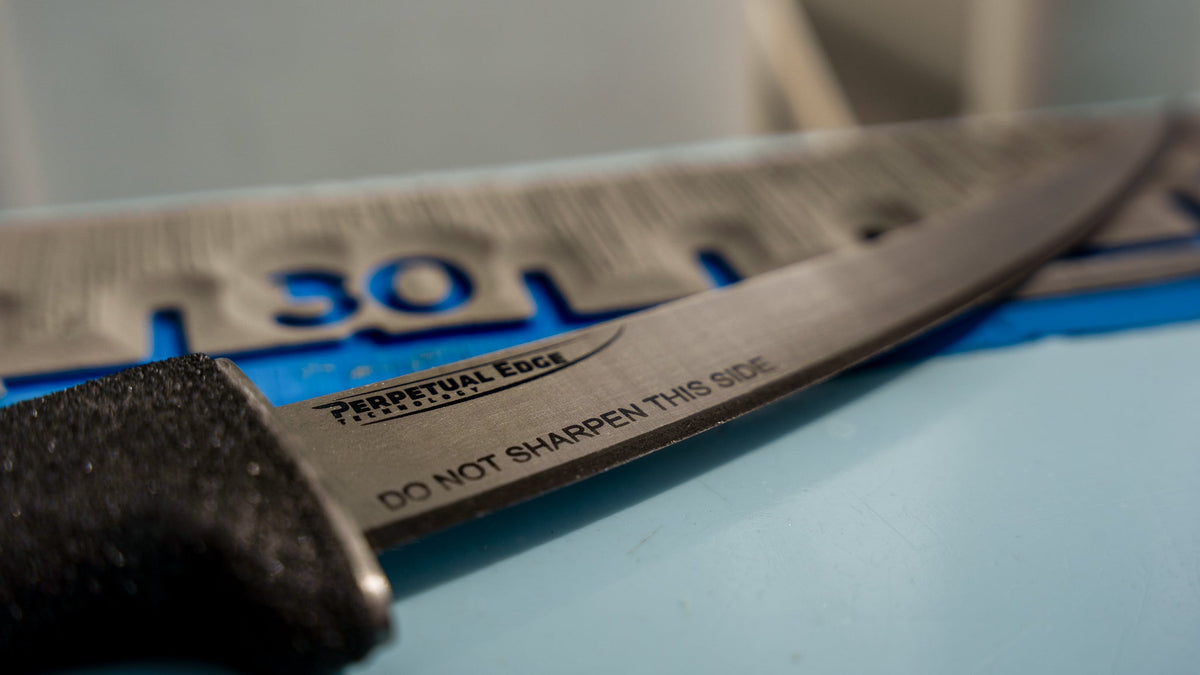
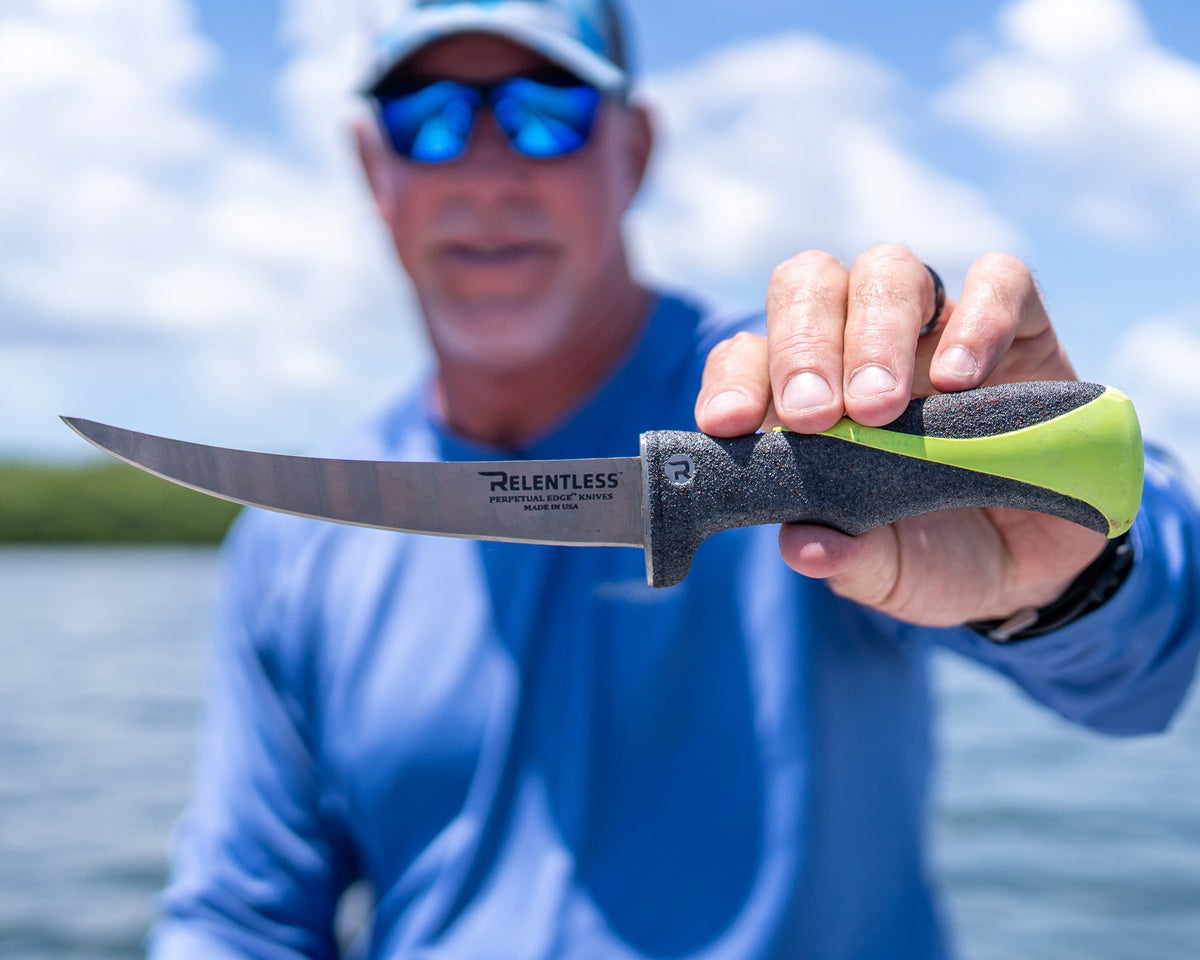
Some knives also approach edge wear differently. The 7-inch curved titanium fillet knife from Relentless uses Perpetual Edge Technology, engineered to help maintain its cutting profile through repeated use.

Why Does My Fillet Knife Get Dull So Fast?
A fillet knife has a fine cutting edge designed to cut precisely through fish. That edge can wear down or get damaged when it repeatedly hits hard materials or is used incorrectly.
Here are five common reasons your knife may be losing its sharpness.
Cutting Through Scales and Hard Bones
Repeated contact with tough scales and hard bones can accelerate edge wear.
This is especially relevant when cleaning fish like redfish and snapper, where tougher scales and substantial rib bones make filleting more demanding.
A fillet knife is designed to follow the backbone and work around ribs, not chop through heavy bones.
Use controlled cuts and follow the fish's natural contours rather than forcing the blade through hard material.
Using the Wrong Cutting Surface
Your cutting board can affect how long your knife stays sharp.
Hard surfaces such as glass, stone, and ceramic can damage a fine cutting edge through repeated contact.
A stable, food-safe cutting board made from a more forgiving material is a better choice.
If you're cleaning fish at a dock or camp, check for sand and grit before starting. Even a good cutting board can cause problems when abrasive debris gets between the blade and the surface.
Twisting, Scraping, or Using Too Much Pressure
Poor technique can shorten a cutting edge's life.
Twisting the blade against a bone, using it to pry, or scraping the board with the sharpened edge can cause unnecessary wear or damage.
If the knife starts resisting your cut, don't simply push harder.
Adjust your cutting angle, reposition the fish, and use smooth, controlled strokes.
Improper Sharpening
A knife can feel sharp immediately after sharpening but lose cutting performance quickly if the edge wasn't finished correctly.
One common problem is a burr, a thin strip of metal left along the cutting edge during sharpening.
If that burr isn't removed properly, it can bend or break away during use, leaving the knife feeling dull again.
Inconsistent sharpening angles can also affect edge quality.
The Blade's Edge Design
Not all fillet knives wear the same way.
Blade hardness, edge geometry, and the materials used along the cutting edge influence how the knife performs over time.
A harder edge may resist certain types of wear, but hardness alone doesn't guarantee better cutting performance.
How the edge is built matters too.
Is Your Fillet Knife Actually Dull?
A knife that struggles to cut isn't always dull.
Sometimes the problem is blade friction, cutting technique, or using the wrong blade shape for the job.
For example, a knife may drag while removing skin from a broad salmon fillet even when its cutting edge is still reasonably sharp.
Before sharpening again, consider what you're experiencing.
|
What You Notice |
Possible Cause |
What to Check |
|
Knife tears instead of slicing |
Worn or damaged edge |
Edge condition |
|
Blade drags through fillets |
Friction or poor technique |
Cutting angle and blade condition |
|
Knife struggles around ribs |
Blade angle or control |
Cutting technique |
|
Knife dulls soon after sharpening |
Poor edge finish or remaining burr |
Sharpening process |
|
Edge develops visible damage |
Hard contact or misuse |
Cutting surface and technique |
If you notice visible damage or a sudden loss of cutting performance, stop and inspect the knife carefully before continuing.
How to Keep Your Fillet Knife Sharp Longer
You don't need expensive equipment to prevent many common causes of premature dulling.
A few habits at the cleaning table can make a difference.
1. Choose the right cutting board. Use a stable, food-safe surface that's easier on the edge than glass, stone, or metal.
2. Work around hard bones. Follow the backbone and ribs rather than forcing the blade through them.
3. Keep your cutting surface clean. Remove sand, grit, and other debris that could damage the edge.
4. Use controlled cutting motions. Avoid twisting, prying, or scraping with the sharpened edge.
5. Clean and store your knife properly. Remove fish residue, wash, rinse, dry, and protect the blade during storage.
6. Follow the manufacturer's sharpening instructions. Different edge designs require different maintenance methods.
Conventional steel knives may benefit from proper honing and sharpening when needed.
Relentless knives require a different approach because of their specialized edge construction. Owners should follow the company's Relentless knife sharpening and maintenance instructions rather than treating the Power Strip like a standard steel bevel.

Why Edge Construction Matters More Than Most Anglers Realize
Good technique helps protect your knife, but edge construction also affects how it wears.
What Happens as a Conventional Edge Wears?
Picture a conventional cutting edge as a narrow V.
As the knife cuts, the fine edge can gradually wear, roll, or develop small areas of damage.
Over time, the edge may become more rounded and less effective.
That's when you start noticing the knife dragging through fish skin or requiring additional pressure.
Sharpening can restore the edge, but it also removes some blade material.
How Perpetual Edge Technology Changes the Wear Pattern
Relentless uses Perpetual Edge Technology to approach edge wear differently.
The system features a harder Power Strip along one side of its aerospace-grade titanium blade.
That strip incorporates tungsten carbide and crushed diamond technology.
Because the Power Strip is harder than the titanium on the opposite side, the two materials wear at different rates.
This process, called differential wear, is engineered to help maintain a useful cutting profile as the knife cuts.
Relentless describes the system as designed to sharpen as it cuts.
That doesn't mean the knife is impossible to damage or will never need maintenance. It means the edge wears differently than a conventional fillet knife.
For anglers who regularly clean several fish in one session, that distinction is worth considering.

When Is It Time to Consider a Better Fillet Knife?
If your knife repeatedly loses its edge despite proper technique and maintenance, it may be time to consider another option.
Look for a knife with an edge design suited to repeated cutting, a blade length that matches the fish you clean, and a handle you can control when your hands are wet or slimy.
Corrosion resistance also matters, especially around saltwater.
A good fillet knife should make cleaning fish more manageable without requiring constant attention to its cutting edge.
Relentless Fillet Knives Designed for Repeated Cutting
Relentless builds its American-made fillet knives around lightweight titanium construction and Perpetual Edge Technology.
Two curved models are good starting points for anglers looking to upgrade.
Best All-Around: 7-Inch Curved Titanium Fillet Knife
The 7-inch curved titanium fillet knife is a versatile choice for walleye, bass, redfish, medium snapper, and similar species.
Its curved blade helps anglers work along backbones and around ribs.
Perpetual Edge Technology helps maintain cutting performance, while titanium construction resists rust and corrosion.
The True Grit handle provides a secure grip in wet or slimy conditions. SlickCut anti-friction treatment reduces drag as the blade moves through fish.
For Smaller Fish: 6-Inch Curved Titanium Fillet Knife
The 6-inch curved titanium fillet knife is a practical option for crappie, trout, smaller snapper, and detail work.
Its shorter blade offers maneuverability around smaller bones and in tighter areas.
Both knives use Relentless's titanium construction and specialized edge technology.
If you're unsure which blade length fits your fishing, our guide to choosing the right fillet knife can help you compare options.

Does a Relentless Fillet Knife Ever Need Sharpening?
Yes. Even a knife with Perpetual Edge Technology may eventually require maintenance.
The system is engineered to control how the cutting edge wears, but it doesn't prevent every type of damage.
Relentless provides specific edge-care instructions because its Power Strip requires a different maintenance approach from conventional steel knives.
The company also offers factory sharpening, edge repairs, and other services through its Relentless Lifetime Maintenance Warranty, subject to published terms and repair limitations.
That support can be valuable for anglers who want to maintain a quality knife over years of use.
Fillet Knife Sharpness FAQs
Why Does My Fillet Knife Get Dull After Only a Few Fish?
Common causes include contact with bones, scales, hard cutting surfaces, poor technique, and improper sharpening.
The blade's edge construction also affects how it wears during repeated cutting.
Does Cutting Through Fish Scales Dull a Knife?
Repeated contact with hard or abrasive scales can wear down the edge.
Use controlled cuts and, when possible, avoid forcing the blade through tough material.
Can a Cutting Board Dull a Fillet Knife?
Yes. Hard surfaces such as glass, stone, and ceramic can damage a fine cutting edge.
A stable, food-safe cutting board made from a more forgiving material is generally a better choice.
How Often Should You Sharpen a Fillet Knife?
There's no single schedule that works for every knife.
Sharpening frequency depends on the blade's construction, how often you use it, and how well you maintain it.
Follow the manufacturer's recommendations and address declining cutting performance as needed.
Why Does My Fillet Knife Still Drag After Sharpening?
The edge may not have been sharpened correctly, but dullness isn't the only possible cause.
Blade friction, cutting technique, fish size, and blade shape can all affect how smoothly a knife moves through a fillet.
Stop Fighting a Dull Fillet Knife
If your fillet knife gets dull too quickly, start by looking at how you use and maintain it.
Better cutting surfaces, controlled technique, and proper edge care can help prevent unnecessary wear.
But edge construction matters too.
Relentless Knives USA builds its American-made titanium fillet knives with Perpetual Edge Technology, designed to help maintain a useful cutting profile through differential wear.
Combined with lightweight construction, corrosion resistance, and long-term maintenance support, this gives anglers a different approach to keeping their knives working effectively.
If you're ready to upgrade, shop the Relentless 7-inch curved titanium fillet knife and see how Perpetual Edge Technology is applied to a versatile fishing knife.

Leave a comment
This site is protected by hCaptcha and the hCaptcha Privacy Policy and Terms of Service apply.