
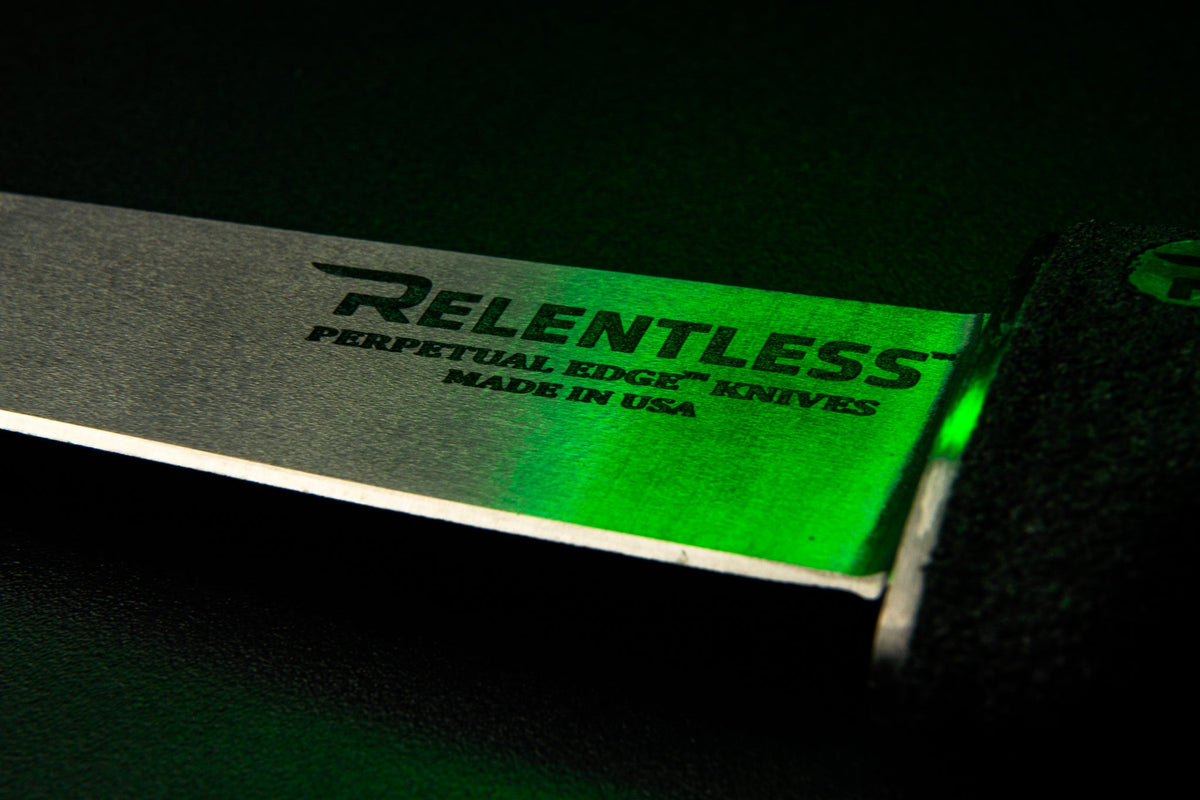
Do titanium knives stay sharp? With a conventional titanium edge, edge retention can be a trade-off compared with hardened stainless steel. But not every titanium knife uses a conventional edge.
That distinction matters when choosing between a titanium and stainless steel fillet knife.
Stainless steel can provide good edge retention, but titanium brings advantages that are especially useful around fish and water. It is lightweight and highly corrosion-resistant. Relentless then addresses the traditional titanium edge-retention concern with Perpetual Edge Technology, an edge system engineered to help maintain its cutting profile as you use it.
For an angler who wants titanium's advantages without settling for a conventional titanium edge, that changes the comparison.
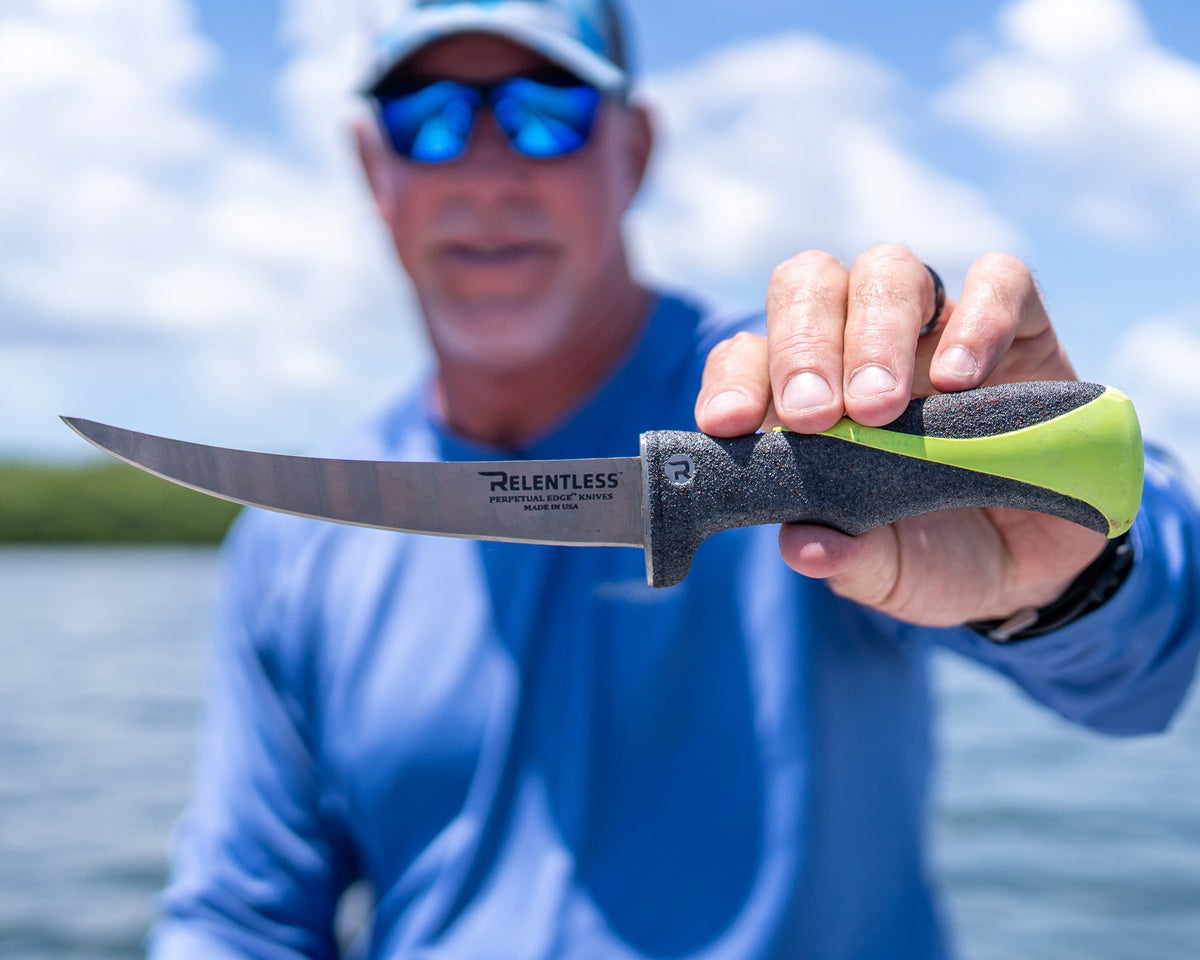
The 7-inch curved titanium fillet knife is a good example of how Relentless puts those benefits together in a USA-made fishing knife.
Titanium vs. Stainless Steel: Which Is Better for a Fillet Knife?
If you compare only conventional edge retention, many hardened stainless steels beat standard titanium alloys.
But a fillet knife has to do more than hold an edge.
It gets covered in water and fish slime. It may sit on a boat in salt spray, ride in a tackle bag, or clean several fish in one session. Weight matters during repeated cuts, and corrosion resistance becomes especially important around saltwater.
That makes the complete comparison more useful:
|
Feature |
Titanium |
Stainless Steel |
|
Corrosion resistance |
Excellent |
Varies by steel grade |
|
Weight |
Lower density |
Higher density |
|
Conventional edge retention |
Often lower |
Often higher |
|
Wet and marine environments |
Strong material choice |
Depends on steel and care |
|
Specialized edge technology |
Available on Relentless knives |
Depends on manufacturer |
|
Routine care |
Still requires cleaning and proper storage |
Still requires cleaning and proper storage |
For anglers, titanium already has compelling material advantages.
The traditional question has been whether those benefits are worth giving up some conventional edge retention.
Relentless is designed to make that tradeoff much less straightforward.
Why Conventional Titanium Knives Can Lose Their Edge Faster
Understanding titanium's traditional weakness helps explain why Relentless takes a different approach.
Titanium Is Generally Softer Than Hardened Knife Steel
Many titanium alloys are softer than hardened stainless steels used for knife blades.
On a conventional blade, that can mean the titanium cutting edge wears faster through repeated use.
This is why you may hear that titanium makes a great corrosion-resistant knife but a poor cutting edge.
That criticism can be reasonable when discussing a conventional titanium edge.
It does not describe every titanium knife design.
Blade Material Is Only Part of the Knife
A knife's cutting performance depends on more than the material stamped on the blade.
Edge geometry, blade construction, surface treatments, wear characteristics, and edge engineering all matter.
This matters most when comparing a conventional stainless steel fillet knife with a Relentless titanium knife.
Relentless doesn't simply put a standard edge on a titanium blade and ask it to perform like hardened steel.
It uses a different edge system.
How Relentless Addresses Titanium Edge Retention
This is where the titanium-versus-stainless comparison changes.
How Perpetual Edge Technology Works
Relentless uses Perpetual Edge Technology to control how its titanium cutting edge wears.
Along one side of the blade is the Power Strip, which uses carbide and crushed-diamond technology.
The harder Power Strip and softer titanium wear at different rates as the knife is used. Relentless engineers this differential wear to help the blade maintain a fine cutting profile. The system is engineered to sharpen as it cuts.
That doesn't mean the knife cannot be damaged or that it will never require maintenance. It means Relentless addresses the primary weakness of a conventional titanium cutting edge through the edge design itself.
That is an important difference for someone comparing Relentless with a traditional stainless steel fillet knife.
You are not choosing between stainless steel edge retention and a basic titanium edge.
You are comparing stainless steel with a titanium knife specifically engineered to help maintain its cutting performance.
For a closer look, you can also watch videos showing how Relentless Perpetual Edge Technology works.

Why Titanium Makes Sense at the Fish-Cleaning Table
Material comparisons can get technical quickly. The differences are easier to understand after a day on the water.
Imagine several walleye lined up at a cleaning station, a cooler of snapper at the dock, or redfish waiting to be cleaned after a day in coastal water.
Your knife is going to get wet.
Your hands will probably be wet and slimy. The blade may be exposed to saltwater. You will make the same long and short cuts repeatedly as you follow backbones, work around ribs, remove skin, and trim fillets.
That environment plays to titanium's strengths.
Corrosion Resistance Where It Matters
Titanium has excellent corrosion resistance, making it a strong material choice for knives used around freshwater and especially saltwater.
That does not eliminate the need to clean your knife. Relentless recommends washing its knives with fresh water and liquid dish soap, rinsing, and drying before storage.
But when corrosion resistance is a top priority, titanium offers a meaningful advantage.
Less Weight in Your Hand
Titanium also has a lower density than steel.
That means a titanium blade can deliver strength while keeping the knife light.
The difference matters when you are cleaning fish after fish. A lighter knife can feel less cumbersome during repeated passes and detail work.
It also helps anglers who carry gear into remote camps or want to reduce unnecessary weight on the boat.
What About Sharpness and Edge Retention?
This is the question that often pushes buyers back toward stainless steel.
It helps to separate two terms.
Sharpness describes how effectively the edge cuts right now.
Edge retention describes how well it maintains useful cutting performance through use.
With a conventional titanium knife, lower hardness can work against long-term edge retention.
Relentless's approach is different because its cutting edge is designed around differential wear.
When you are following the backbone of a walleye, working around snapper ribs, or separating skin from a fillet, the goal is not to win a hardness comparison on paper.
The goal is a knife that keeps cutting effectively while still giving you the weight and corrosion advantages that led you to titanium in the first place.
That combination is why you'd choose Relentless over a conventional stainless steel fillet knife.
Which Relentless Titanium Fillet Knife Should You Choose?
If titanium makes sense for your style of fishing, the next decision is blade size.
7-Inch Curved Titanium Fillet Knife
For many anglers, the 7-inch curved titanium fillet knife is the best all-around starting point.
The 7-inch curved blade provides enough reach for medium-sized freshwater and coastal fish without making it hard to maneuver around ribs and other detail areas.
It combines aerospace-grade titanium with Perpetual Edge Technology and Relentless's True Grit handle, which is designed for grip when your hands are wet or slimy.
For an angler moving from stainless steel to titanium, I'd position this model as the primary choice.
6-Inch Curved Titanium Fillet Knife
The 6-inch curved titanium fillet knife suits smaller fish and anglers who prefer more maneuverability.
Think crappie, trout, smaller snapper, bait work, and detailed trimming.
You still get the titanium construction and Perpetual Edge Technology in a more compact blade.
If blade size is your main question, use our guide to choosing the right fillet knife to compare your options.

Does a Relentless Titanium Knife Still Need Maintenance?
Yes.
Choosing titanium does not mean ignoring basic knife care.
Relentless recommends cleaning the knife with fresh water and liquid dish soap, rinsing it with clean fresh water, and drying it before storage. Avoid abrasive cleaners, chemical cleaners, and dishwasher cleaning.
Edge maintenance also deserves special attention.
Because Relentless uses a specialized edge design, owners should follow the company's Relentless titanium knife sharpening and maintenance guidance rather than treating the Power Strip like the bevel on a conventional stainless steel knife.
Relentless also backs its knives with factory service through its Lifetime Maintenance Warranty, subject to the company's published terms.
That support adds another consideration to the titanium-versus-stainless decision. You are not simply buying a different blade material. You are buying a specialized edge system with manufacturer support behind it.

Titanium vs. Stainless Steel Fillet Knife FAQs
Do Titanium Knives Stay Sharp?
Conventional titanium knives may lose a traditional cutting edge faster than many hardened stainless steel knives.
Relentless addresses that limitation with Perpetual Edge Technology, which uses differential wear between the titanium and its harder Power Strip to help maintain the cutting edge during use.
Is Titanium Better Than Stainless Steel for a Fillet Knife?
It depends on the knife and what matters most to you.
Hardened stainless steel can offer strong conventional edge retention. Titanium offers excellent corrosion resistance and lower weight.
Relentless combines those titanium advantages with an edge system designed to address conventional titanium's edge-retention weakness.
For anglers, particularly those who regularly fish wet or saltwater environments, that combination makes titanium worth serious consideration.
Are Relentless Titanium Knives Self-Sharpening?
Relentless describes Perpetual Edge Technology as engineered to sharpen as it cuts.
The system uses different wear characteristics between the titanium and the carbide-and-crushed-diamond Power Strip to help maintain the edge.
This does not mean the knife is damage-proof or maintenance-free.
Is a Titanium-Coated Knife the Same as a Titanium Knife?
No.
A titanium-coated knife commonly uses another material, such as steel, for the underlying blade and applies a titanium-based coating to its surface.
Relentless uses aerospace-grade titanium for the blade.
That distinction matters when comparing weight, corrosion resistance, and overall blade construction.
Are Titanium Knives Better for Saltwater?
Titanium's excellent corrosion resistance makes it a strong choice for knives used in saltwater.
A fishing knife still needs proper cleaning and storage, but titanium is especially attractive to anglers who regularly expose their gear to saltwater, spray, wet decks, and humid conditions.
Why Choose a Relentless Titanium Knife Over Stainless Steel?
A stainless steel fillet knife can work. If your only concern is conventional edge retention, hardened stainless steel has a clear case.
But most anglers need more from a knife than that.
They need a blade that performs around water. They want something light in the hand. Saltwater anglers have good reason to care about corrosion. And nobody wants to stop halfway through a pile of fish because the knife is no longer cutting the way it should.
That is where Relentless makes titanium more compelling.
You get the lightweight, corrosion-resistant advantages of an aerospace-grade titanium blade, plus Perpetual Edge Technology engineered to address the edge-retention concern that often pushes buyers toward stainless steel.
Add a True Grit handle designed for wet conditions, USA manufacturing, and long-term factory maintenance support, and the buying decision becomes about more than which metal is harder.
It becomes about which knife is better designed for the conditions you actually use it in.
For anglers who want titanium's advantages without settling for a conventional titanium edge, shop the Relentless 7-inch curved titanium fillet knife and see how Relentless approaches the titanium-versus-stainless tradeoff.


Leave a comment
This site is protected by hCaptcha and the hCaptcha Privacy Policy and Terms of Service apply.