
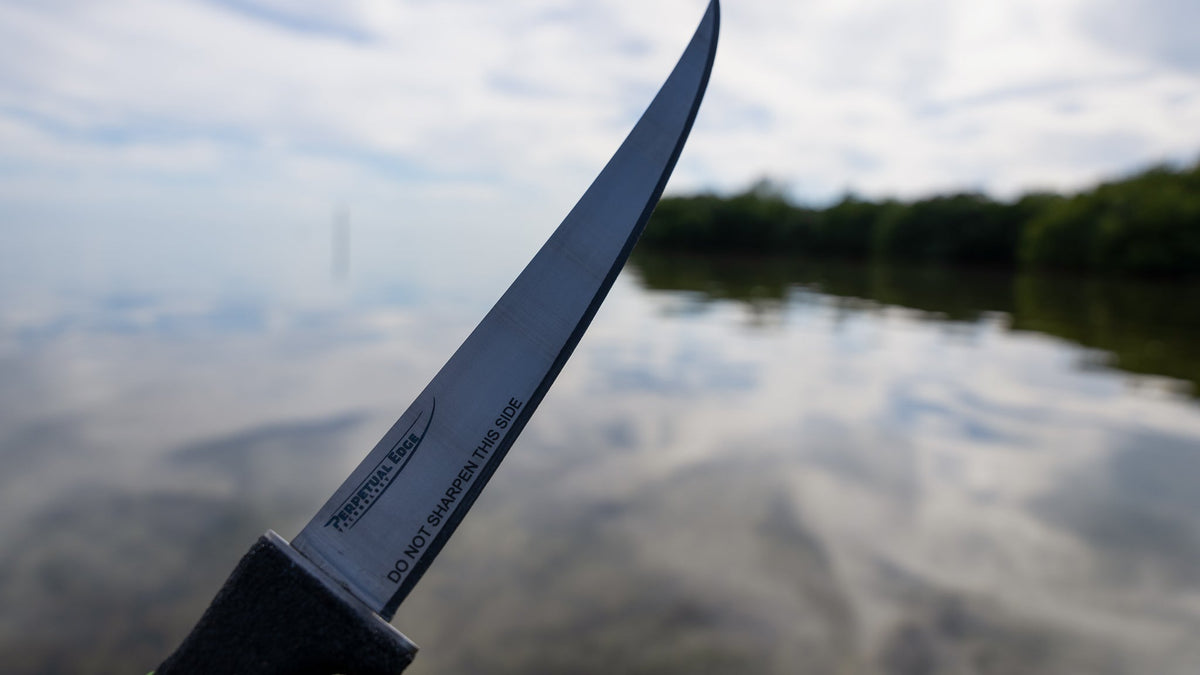
The best fillet knife for walleye should give you enough reach to make smooth cuts without feeling awkward around the ribs, backbone, and smaller detail areas.
Picture coming off the lake with several keeper walleye after a long morning of fishing. At the cleaning station, you want a knife that stays controlled with wet hands and gives you enough blade to work efficiently through each fish.
For most walleye anglers, a 7-inch curved manual fillet knife offers a practical balance of reach and maneuverability. A 6-inch blade can be a better fit for smaller walleye or anglers who prefer a more compact knife.
The Relentless 7-inch curved titanium fillet knife for walleye offers that versatility, paired with lightweight titanium construction and Perpetual Edge Technology.

What Makes a Good Fillet Knife for Walleye?
Walleye usually don't require the extra-long blades used for large salmon, halibut, or offshore species.
Instead, look for a knife that balances reach, control, and cutting performance.
|
Feature |
What to look for |
|
Blade length |
Around 6 to 7 inches for most walleye |
|
Blade shape |
Curved or straight, with curved blades supporting sweeping cuts |
|
Flexibility |
Controlled flex that follows fish contours |
|
Edge |
Designed for consistent cutting through repeated use |
|
Handle |
Secure grip when hands are wet or slimy |
|
Weight |
Comfortable during repeated cuts |
|
Maintenance |
Practical cleaning and appropriate edge care |
No single feature determines whether a knife will work well.
Blade length matters, but so do flexibility, balance, grip, and edge design. The best walleye fillet knife should feel manageable as you guide it around the fish, not force you to compensate for a blade that is too long, too short, too stiff, or too flexible.
What Size Fillet Knife Is Best for Walleye?
For most walleye, a 6- to 7-inch blade is a practical choice.
The best size depends on the fish you typically keep and how much blade control you prefer.
6-Inch Fillet Knife for Smaller Walleye
A shorter fillet knife gives you useful maneuverability around smaller fish.
That can make a 6-inch blade a good option for short, controlled cuts around the rib cage or for trimming smaller areas of a fillet.
It also makes sense for anglers whose cooler contains more than walleye. If you regularly bring home crappie, perch, or trout, a compact blade can handle those smaller fish without feeling oversized.
The Relentless 6-inch curved fillet knife for smaller freshwater fish is designed around this type of precision work.
7-Inch Fillet Knife for Most Walleye
If you want one knife primarily for walleye, 7 inches is the more versatile starting point.
It gives you additional reach for longer cuts along the backbone while remaining manageable as you work around the rib cage and toward the tail.
That balance also makes a 7-inch knife useful for bass and other medium-sized freshwater fish.
For anglers who regularly clean walleye of different sizes, the 7-inch curved titanium fillet knife for walleye is the stronger all-around fit.
When a Longer Blade Makes Sense
Larger walleye may benefit from additional blade length, particularly if you prefer longer cutting strokes.
That does not mean every angler needs a 9-inch knife.
An oversized blade can be harder to maneuver around smaller fish and detailed areas. Match the blade to the fish you actually clean most often.
For a broader look at blade lengths and fish sizes, see our guide to choosing the right fillet knife size.

Should a Walleye Fillet Knife Be Flexible or Stiff?
A walleye fillet knife should generally provide controlled flexibility.
Some flex helps the blade follow the fish's shape as you separate meat from the frame. Too much flex can make precise cuts harder to control.
A very stiff blade presents a different tradeoff. It may not follow changes in the fish's contours as readily.
The goal is not maximum flexibility. It is enough flex to work naturally around the fish while keeping the edge under control.
Working Around Walleye Ribs and Bones
Much of walleye filleting involves guiding the knife along the backbone and working around the rib cage without wasting meat.
Blade control matters here.
After you remove the main fillet, you may need additional trimming around ribs and smaller bones, depending on your preferred cleaning method.
A manageable blade with controlled flex helps when making these more detailed cuts.
Curved vs. Straight Fillet Knife for Walleye
Both curved and straight blades can clean walleye effectively.
If you're choosing one manual knife, a curved blade is a strong starting point.
Why Curved Blades Work Well
A curved fillet knife supports sweeping cutting motions.
This can feel natural as you work along the backbone and follow a walleye's shape toward the tail.
The curved profile can also provide useful maneuverability when separating the fillet or removing skin.
Blade shape alone does not determine performance. Length, flex, edge condition, and technique all matter.
When a Straight Blade Works
Some anglers prefer a straighter cutting profile for controlled trimming and direct cuts.
Walleye don't require a curved blade.
If you already have good technique with a straight fillet knife, there may be little reason to change.
For anglers starting from scratch, though, a 7-inch curved blade provides a useful combination of reach, maneuverability, and sweeping cutting motion for typical walleye.
Manual vs. Electric Fillet Knives for Walleye
Electric fillet knives are popular with some walleye anglers, particularly when processing a large number of fish.
They can make sense when volume is the main concern.
A manual fillet knife offers different advantages. You have direct control over the blade, no batteries to charge, and you can carry the knife anywhere without a power source.
That simplicity can be useful at a remote camp, lakeside cleaning station, or anywhere you want to travel light.
For anglers cleaning a few walleye after a day on the lake, a well-matched manual knife is a practical option.
Neither design is automatically better. The right choice depends on how many fish you normally clean and how much you value direct blade control versus powered cutting.
Recommended Relentless Fillet Knives for Walleye
Relentless offers two curved titanium blade sizes that make sense for walleye anglers.
Best All-Around: 7" Curved Titanium Fillet Knife
For most walleye anglers, the 7-inch curved titanium fillet knife for walleye is the better all-around choice.
The blade offers useful reach without making it hard to maneuver around a medium-sized fish.
Its aerospace-grade titanium construction keeps weight low and resists corrosion. Relentless also uses Perpetual Edge Technology, engineered to help maintain the cutting edge as you use the knife.
The True Grit handle is designed for grip when your hands are wet or slimy.
Those features become useful when several walleye are lined up at the cleaning table, and you are making the same controlled cuts fish after fish.
Best for Smaller Fish and Detail Work: 6" Curved
If you regularly clean smaller walleye or prefer a shorter knife, the 6-inch curved fillet knife is a more compact option.
The shorter blade provides extra maneuverability for detail work.
It also works well for mixed freshwater catches. If you spend one weekend cleaning walleye and the next working through crappie, perch, or trout, a 6-inch knife offers plenty of versatility.
Both models are made in the USA.

Why Edge Performance and Grip Matter When Filleting Walleye
Blade length gets much of the attention when anglers shop for a fillet knife, but it is only part of the equation.
A knife also needs to keep cutting effectively and feel secure in your hand.
Maintaining Cutting Performance
A controlled cutting edge matters when you follow a backbone, trim around ribs, or remove skin.
It becomes even more noticeable when you have several fish to clean.
Relentless uses Perpetual Edge Technology to approach edge wear differently.
Its Power Strip incorporates carbide and crushed-diamond technology, creating different wear characteristics along the cutting edge. The system is engineered to help maintain the edge as the knife cuts.
That doesn't mean a Relentless knife cannot be damaged or that it will never need maintenance. The company provides specific edge-care guidance and factory maintenance support.
Grip and Comfort at the Cleaning Table
Anyone who has cleaned several walleye knows how quickly a dry cleaning table becomes wet and slippery.
Your hands may be covered in water, slime, scales, or blood while you are controlling the blade.
Relentless's True Grit handle is designed for grip in wet and slimy conditions.
The lightweight titanium blade also makes repeated cutting more comfortable, while SlickCut treatment reduces friction during cutting.
These features address practical problems anglers face at the cleaning table rather than simply adding specs.
How to Care for Your Walleye Fillet Knife
Even a corrosion-resistant fillet knife needs proper care.
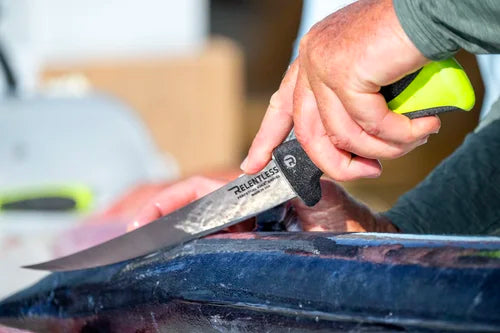
Relentless recommends cleaning its knives with fresh water and liquid dish soap, rinsing with clean fresh water, and drying them before storage.
The company advises against abrasive cleaners, chemical cleaners, and using the dishwasher.
Perpetual Edge Technology also requires specific edge-care procedures.
Review the company's Relentless knife care and sharpening guidance before attempting edge maintenance.
Relentless also provides factory maintenance through its Lifetime Maintenance Warranty, subject to the published warranty terms.
Best Fillet Knife for Walleye FAQs
What Size Fillet Knife Is Best for Walleye?
A 6- to 7-inch fillet knife works well for many walleye anglers.
A 7-inch blade is a versatile starting point because it provides useful reach without becoming overly cumbersome.
A 6-inch knife may be better for smaller fish or anglers who prefer more maneuverability.
Is a Curved or Straight Fillet Knife Better for Walleye?
Both can work.
A curved blade is a practical choice because its profile supports sweeping cuts and provides useful maneuverability.
A straight blade may appeal to anglers who prefer a more direct cutting path.
Should a Walleye Fillet Knife Be Flexible?
Some controlled flexibility is useful.
It helps the blade follow the fish's shape while working around the frame and ribs.
The goal is not necessarily the most flexible blade available. Too much flex can make certain cuts harder to control.
Is a Manual or Electric Fillet Knife Better for Walleye?
It depends on how you clean fish.
Manual knives provide direct blade control, require no power source, and are easy to carry.
Electric knives can be useful when processing larger catches.
For anglers cleaning fewer fish, a good manual knife is a simple, versatile choice.
Can You Use the Same Fillet Knife for Walleye and Crappie?
Yes.
A 6-inch blade is particularly manageable for smaller crappie while still providing enough length for many walleye.
A 7-inch knife is the more versatile choice if walleye are your primary target and crappie are an occasional part of your catch.
Which Fillet Knife Should You Choose for Walleye?
For most anglers, a 7-inch curved manual fillet knife is a sensible starting point for walleye.
It provides enough reach for longer cuts while remaining manageable around ribs, skin, and detailed areas.
Consider a 6-inch curved blade if you primarily clean smaller fish or prefer a compact knife.
Relentless combines these practical blade sizes with lightweight titanium construction, Perpetual Edge Technology, and handles designed for wet fishing conditions.


Leave a comment
This site is protected by hCaptcha and the hCaptcha Privacy Policy and Terms of Service apply.