
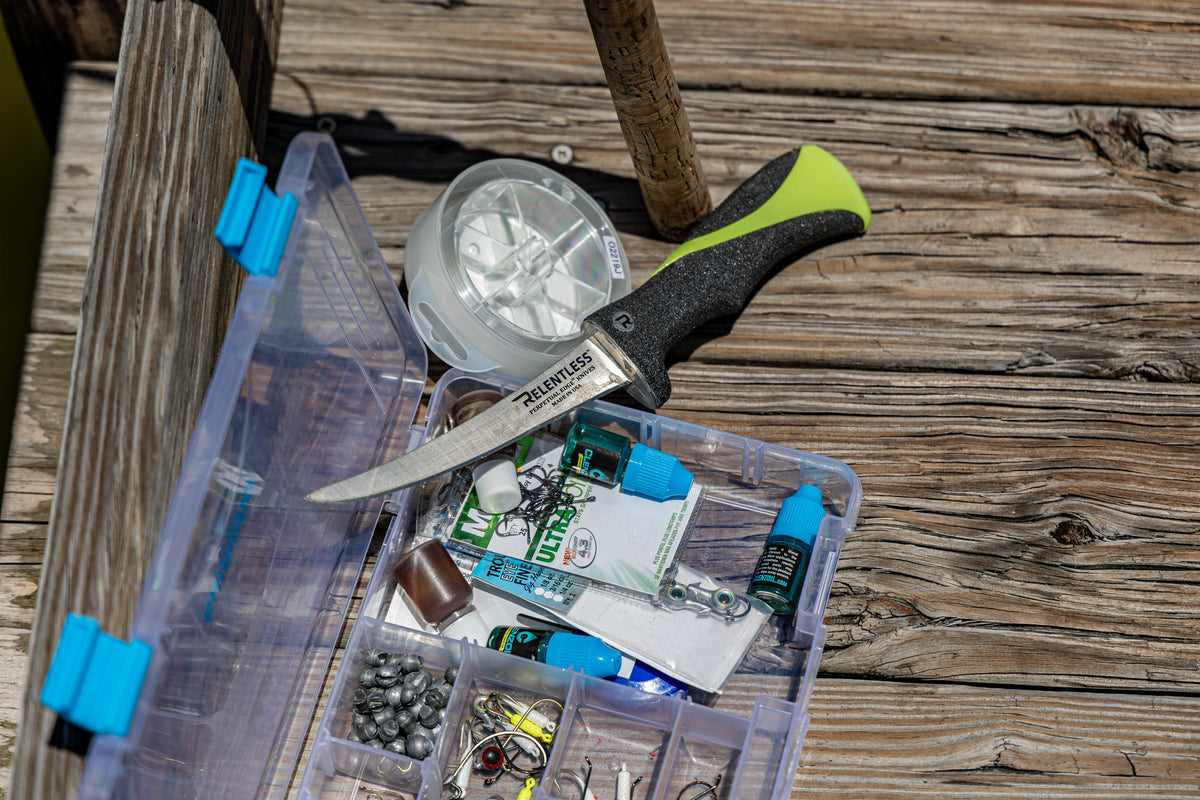
A good fillet knife makes fish cleaning faster, cleaner, and a lot less frustrating. If you have ever tried to fillet walleye with a dull blade or clean snapper with a slippery handle, you already know how much the right knife matters once the fish hits the cleaning table.
The challenge is figuring out which fishing filet knife actually fits the way you fish. Blade length, flexibility, handle grip, corrosion resistance, and weight all matter once you start cleaning fish regularly.
Whether you fish freshwater lakes for crappie and bass or spend long days in saltwater chasing tuna and mahi-mahi, the right knife should feel comfortable in your hand and stay dependable in wet conditions. Anglers looking for lightweight, corrosion-resistant options may want to compare lightweight titanium fishing fillet knives from Relentless.

What Makes a Good Fishing Filet Knife?
Not every fillet knife performs the same once fish slime, saltwater, and long cleaning sessions come into play. A knife that feels fine in the store can become uncomfortable or difficult to control after cleaning a limit of fish at the dock.
Here are the features that matter most.
Blade Flexibility vs Stiffness
Most fishing filet knives use a flexible blade so the edge can follow the backbone and ribs more closely. This helps create cleaner fillets with less wasted meat.
Flexible blades work especially well for fish like walleye, crappie, trout, snapper, and panfish, where tighter cuts matter more than raw cutting power.
Stiffer blades are usually better for larger species, where long slicing cuts matter more than detailed control around smaller bones.
For most first-time buyers, moderate flexibility is the safest choice. It gives you enough control for detail work while still handling larger fish without feeling too soft.
Blade Length Matters More Than Most Anglers Think
The wrong blade length can make fish cleaning harder than it needs to be.
Shorter blades offer better precision. Longer blades help with large fish and long cutting strokes.
As a general guide:
-
6-inch blades work well for trout, crappie, bait work, and detail cuts
-
7-inch blades are excellent all-around fishing knives
-
9-inch blades fit larger salmon, mahi, tuna, and wahoo
-
10-inch straight blades help with long, smooth passes on large fish like halibut and salmon
A lot of anglers eventually own more than one size, but a 7-inch curved fillet knife is usually the best starting point.
Handle Grip and Comfort
Fish cleaning gets messy fast. Wet hands, slime, scales, and blood all affect grip and control.
A good handle should feel secure even when conditions are slick. This becomes even more important after cleaning multiple fish in a row, when hand fatigue sets in.
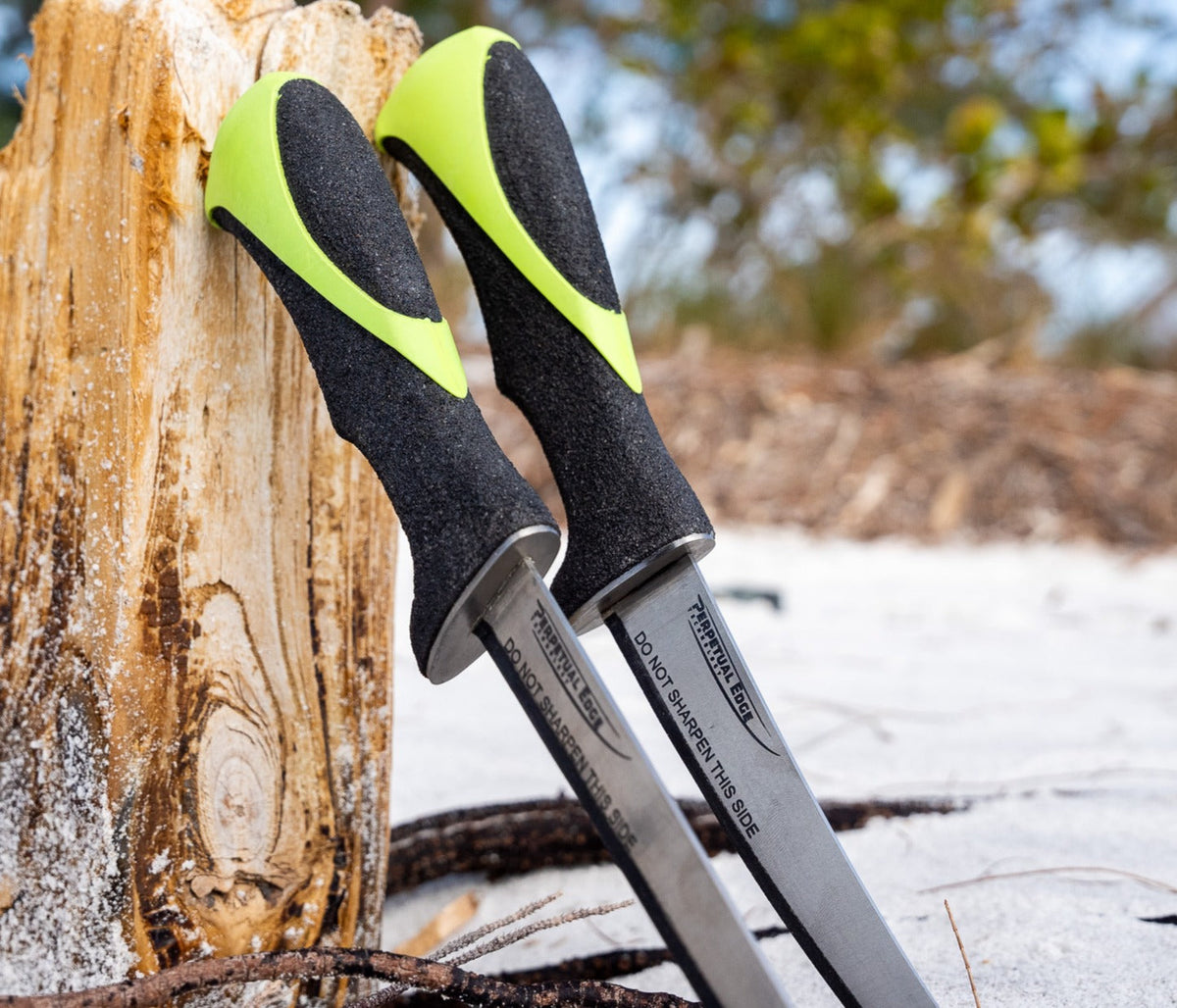
Relentless knives use a True Grit handle designed to improve grip in wet conditions. Combined with lightweight titanium construction, the knife feels easier to control during repeated cuts.
Corrosion Resistance for Saltwater Fishing
Saltwater is hard on knives. Even quality stainless steel can develop corrosion if it stays wet in a tackle bag, boat compartment, or fish-cleaning station.
Titanium helps resist rust and corrosion, making it especially useful for offshore and inshore saltwater fishing, coastal environments, and humid climates.
That matters when you are cleaning redfish at the dock, filleting snapper offshore, or processing tuna after a long day on the water.
Relentless also builds its knives around Perpetual Edge Technology, which is engineered to help maintain cutting performance during regular use.
You can also learn more about the company’s American-made fillet knives and outdoor focus.
Choosing the Right Fillet Knife Size
One of the biggest mistakes first-time buyers make is choosing a blade that does not match the fish they most often clean.
A knife that feels perfect for crappie can feel too short for salmon. A large blade built for tuna may feel awkward when cleaning trout.

Best 6” Fillet Knife Uses
A 6-inch curved fillet knife gives you excellent control for smaller fish and tighter cuts.
It works especially well for trout, crappie, bluegill, perch, snapper, and bait preparation. Smaller blades also help when working around rib bones or making precise cuts near the skin.
Why a 7” Blade Is the Best All-Around Choice
For most anglers, a 7-inch curved blade is the sweet spot.
It has enough length for walleye, bass, redfish, lake trout, and medium salmon while still feeling nimble enough for detail work.
If you only plan to own one fishing filet knife for now, this size is usually the best place to start.
When You Need a 9” or 10” Fillet Knife
Larger fish demand longer blades.
A 9-inch curved knife is helpful for filleting salmon, mahi-mahi, tuna, and wahoo. A 10-inch straight blade shines during long slicing passes on fish like halibut and large salmon.
Longer blades reduce the need for repeated sawing motions and help create cleaner cuts across larger fillets.
Recommended Relentless Fillet Knives by Fish Size
Once you narrow down the right blade length, choosing a knife designed for your fishing style becomes much easier.
If you are comparing sizes for your first premium fillet knife, these are strong starting points:
-
6” Curved Fillet Knife for trout, crappie, panfish, and precision work
-
7” Curved Fillet Knife for all-around freshwater and coastal fishing
-
9” Curved Fillet Knife for larger offshore species and heavy fish-cleaning sessions
Browse the full collection to shop Relentless fillet knives by fishing style and blade size.
Titanium vs Stainless Steel Fillet Knives
Most anglers are familiar with stainless steel fillet knives because they are common and affordable. But titanium offers several advantages for anglers who spend a lot of time around water.
Why Titanium Matters for Saltwater Anglers
Saltwater exposure creates constant maintenance challenges.
A knife left wet on a boat deck or forgotten in a fish box can start to corrode surprisingly quickly. Titanium helps resist rust and corrosion, making it well-suited for harsh fishing environments.
That matters during offshore tuna trips, coastal redfish fishing, kayak fishing, dock-cleaning sessions, and in humid storage conditions.
Titanium also keeps weight down, which many anglers notice immediately once they start processing multiple fish.
Reduced Hand Fatigue During Long Cleaning Sessions
Cleaning one fish is easy. Cleaning twenty walleye after a good day on the lake is different.
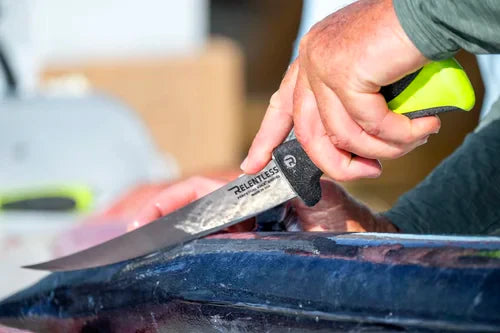
A lightweight knife reduces strain on the wrist and forearm during repetitive cuts. That becomes noticeable during tournament prep, salmon runs, offshore trips, and large family fish fries.
Relentless knives are built from aerospace-grade titanium and feature SlickCut anti-friction treatment to reduce drag when cutting through skin and meat.
Edge Retention and Sharpening Reality
One frustration many anglers share is the constant need to sharpen.
A cheap knife may feel sharp for the first few fish, then quickly lose performance halfway through a cleaning session.
Relentless uses Perpetual Edge Technology, designed to help maintain cutting performance over time. The system uses carbide and crushed diamond technology in the Power Strip to help maintain consistent cutting performance over time.
No knife is maintenance-free, especially in saltwater environments, but reducing sharpening interruptions can make long cleaning sessions smoother and more consistent.
Relentless also backs qualifying products with a Lifetime Maintenance Warranty for long-term support.

Common Mistakes First-Time Buyers Make
Many anglers buy their first fillet knife based only on price or appearance. That often leads to frustration later.
Buying the Wrong Blade Length
A blade that is too large becomes awkward for smaller fish. A blade that is too short struggles with salmon, halibut, or tuna.
Think about the species you clean most often before choosing a size.
Ignoring Corrosion Resistance
Freshwater anglers may get away with basic steel longer than saltwater anglers. But once saltwater enters the picture, corrosion becomes a real issue.
If you fish coastal water regularly, corrosion resistance deserves serious attention.
Choosing Price Over Long-Term Performance
Cheap knives can work fine for occasional use. But anglers who clean fish regularly usually notice the downsides quickly:
-
edge loss
-
slippery handles
-
rust
-
hand fatigue
-
constant sharpening
Paying more up front often means fewer replacements and better long-term performance.
Overlooking Handle Grip
Grip matters more than many first-time buyers expect.
Fish slime, blood, sunscreen, and water all affect control. A secure handle improves comfort and cutting confidence in messy conditions.
How to Maintain a Fishing Filet Knife
Even premium fishing filet knives need regular care.
Basic maintenance goes a long way:
-
Rinse the knife after use, especially after saltwater exposure
-
Dry it before storage
-
Store it in a clean, dry location
-
Inspect the edge regularly
-
Sharpen when performance starts to decline
The National Center for Home Food Preservation also recommends cleaning knives thoroughly during fish processing to support food safety practices.
Relentless owners can also review the Relentless knife FAQs for maintenance and product guidance.

Best Fishing Filet Knife for Beginners
If you are buying your first serious fillet knife, a 7-inch curved blade is usually the best all-around option.
It handles a wide range of fish sizes while still giving you enough control for precise cuts. For anglers who fish both freshwater and saltwater, corrosion resistance and lightweight construction also become important over time.
That is where titanium knives stand apart. A lighter knife can feel noticeably better during long fish-cleaning sessions, especially when conditions are wet and repetitive.
Relentless combines:
-
Aerospace-grade titanium construction
-
Corrosion resistance
-
Lightweight handling
-
Perpetual Edge Technology
-
Made-in-USA craftsmanship
-
Long-term warranty support
for anglers who want a dependable knife built for real fishing conditions.
Ready to upgrade from disposable fishing knives? Browse the full collection of American-made titanium fillet knives from Relentless Knives USA.
Frequently Asked Questions About Fishing Filet Knives
What size fillet knife is best for beginners?
A 7-inch curved fillet knife is usually the best starting point because it works well for many freshwater and coastal species.
Is titanium better than stainless steel for fishing knives?
Titanium helps resist rust and corrosion and is lighter than many steel knives. That makes it useful for saltwater environments and long cleaning sessions.
What’s the best fillet knife for saltwater fishing?
A corrosion-resistant knife with a secure grip is ideal for saltwater use. Many anglers prefer titanium because it handles wet, harsh conditions well.
How often should you sharpen a fillet knife?
That depends on fish volume, blade material, and cutting conditions. Heavy use usually requires more frequent maintenance.
What’s the difference between a fillet knife and a boning knife?
Fillet knives are generally thinner and more flexible, so they can follow fish bones closely. Boning knives are often stiffer and designed more for meat processing.

Leave a comment
This site is protected by hCaptcha and the hCaptcha Privacy Policy and Terms of Service apply.