
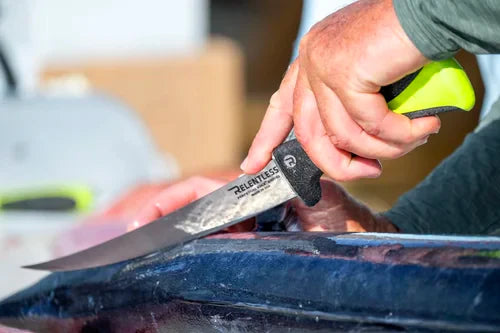
If you've already decided that you need a fillet knife for fish, you're past the question of whether a specialized knife is worth owning. Now the goal is finding the right one.
The challenge is that not all fillet knives are built for the same fish, fishing styles, or environments. A knife that works perfectly for crappie and trout may not be ideal for salmon or halibut. Likewise, a blade that performs well at a freshwater cleaning station may face different demands when exposed to saltwater, fish slime, and long days on the water.
The best fillet knife for fish is not necessarily the longest blade or the most expensive option. It is the knife that matches the species you catch, the way you clean fish, and the conditions where you spend most of your time fishing.
For anglers looking for a premium option designed for wet, demanding environments, Relentless offers a collection of titanium fillet knives built for freshwater and saltwater fishing alike.

What Makes a Good Fillet Knife for Fish?
A fillet knife is designed to separate meat from bone while minimizing waste. The thin blade allows anglers to follow the natural contours of the fish, making cleaner cuts and producing better fillets.
When comparing options, four factors matter most: blade length, flexibility, grip, and corrosion resistance.
Blade Length
Blade length should match the size of the fish you clean most often.
As a general guide:
-
6-inch blades work well for trout, crappie, perch, bluegill, and panfish
-
7-inch blades are ideal for walleye, bass, pike, redfish, and many inshore species
-
9-inch blades work well for salmon, mahi-mahi, and tuna
-
10-inch blades are best for large fish that require long, sweeping cuts
For many anglers, a 7-inch blade provides the best combination of versatility and control.
Blade Flexibility
Flexibility helps the blade glide along rib bones and under the skin without removing excess meat.
A moderately flexible blade is often the sweet spot. It provides enough give for precise filleting while maintaining the stability needed for longer cuts on larger fish.
Grip and Control
Fish cleaning is rarely clean work.
Whether you're cleaning walleye at the dock, processing snapper after an offshore trip, or filleting trout back at camp, wet hands and slippery conditions are part of the job.
Relentless knives feature a True Grit handle designed to help maintain control when hands are wet, slimy, or covered in fish scales.
Choosing the Right Fillet Knife for the Fish You Catch
One of the biggest buying mistakes anglers make is focusing only on blade length without considering the fish they target most often.
Small Fish and Panfish
If you primarily clean crappie, perch, bluegill, or trout, a shorter blade gives you more precision.
Working around smaller rib cages and delicate fillets becomes easier with a compact blade that offers better control.
The 6-inch Curved Fillet Knife is a strong fit for anglers who regularly target smaller freshwater species.
Walleye, Bass, and Multi-Species Fishing
Many anglers do not target just one species.
One weekend may involve spring crappie. The next could mean walleye, bass, or northern pike.
For anglers who want one knife that handles the widest variety of fish, a 7-inch curved blade is often the best balance of reach, flexibility, and maneuverability.
The 7-inch Curved Fillet Knife is often the closest thing to a do-it-all fillet knife for freshwater and inshore fishing.
Salmon, Tuna, and Larger Saltwater Fish
Larger fish benefit from longer blades.
When cleaning salmon, halibut, mahi-mahi, tuna, or other large species, longer slicing strokes help produce cleaner fillets and smoother cuts.
The 9-inch Curved Fillet Knife and 10-inch Straight Fillet Knife are designed for anglers who routinely process larger fish.
Titanium vs Stainless Steel Fillet Knives
Most fillet knives on the market use stainless steel. It remains a proven and effective blade material.
However, titanium offers several advantages that many serious anglers appreciate.
Corrosion Resistance
Saltwater is tough on gear.
Fish blood, salt spray, humidity, and wet storage compartments can all contribute to corrosion over time.
Titanium helps resist rust and corrosion, making it particularly attractive for:
-
Coastal anglers
-
Offshore fishermen
-
Kayak anglers
-
Fishing guides
-
Anglers who fish in humid environments
Reduced Weight
The benefits of a lighter knife become more noticeable during long cleaning sessions.
After filleting a limit of walleye, processing several salmon, or cleaning a cooler full of snapper, reduced weight can help lessen hand and wrist fatigue.
Relentless uses aerospace-grade titanium construction to create lightweight knives built for demanding outdoor use.
Long-Term Cutting Performance
Many anglers dislike stopping in the middle of a fish-cleaning session to touch up a blade.
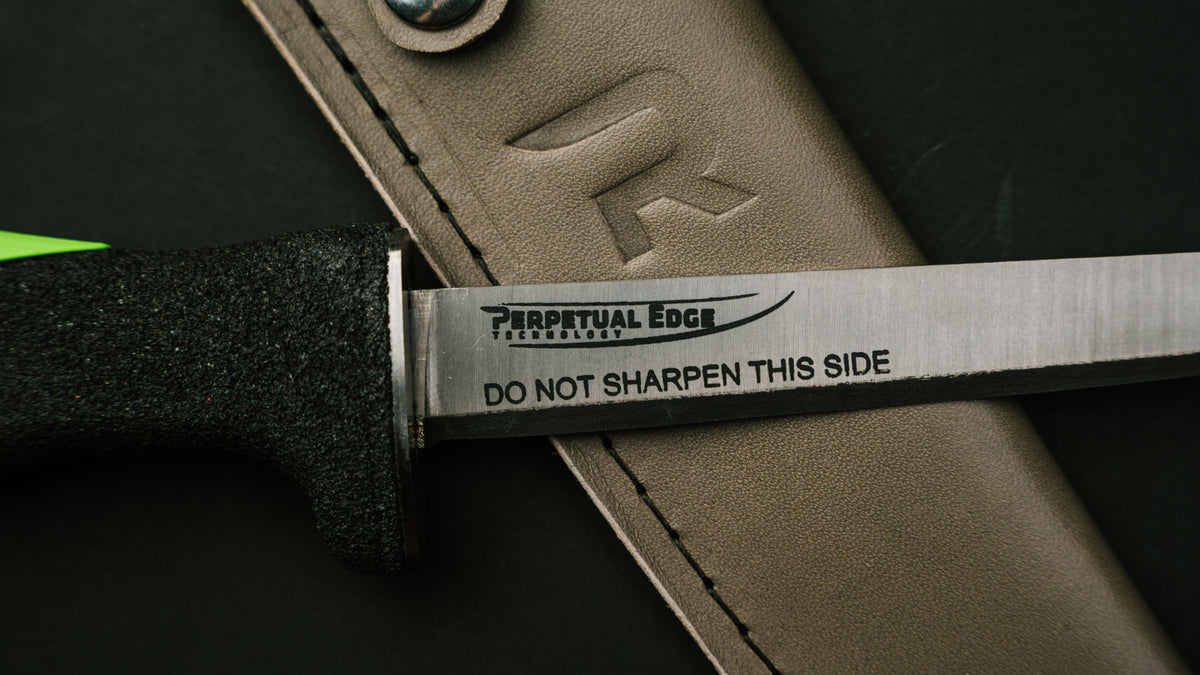
Relentless incorporates Perpetual Edge Technology, which is engineered to sharpen as it cuts. The system uses carbide and crushed diamond technology within the Power Strip and is designed to help maintain cutting performance during regular use.
No fillet knife is maintenance-free, but many anglers appreciate reducing how often they need to sharpen their blade.
Recommended Relentless Fillet Knives by Fishing Style
Best All-Around Fillet Knife
If you want one knife that can handle the widest variety of fish species, the 7-inch Curved Fillet Knife is the strongest overall choice.
It performs well on walleye, bass, trout, redfish, snapper, and many other freshwater and inshore species.
Best for Precision Work
The 6-inch Curved Fillet Knife offers excellent control when working with smaller fish and detailed cuts around ribs and pin bones.
Best for Large Fish
For salmon, tuna, mahi-mahi, and larger species, the 9-inch Curved Fillet Knife provides greater reach and longer slicing capability.
Why Long-Term Ownership Matters
When comparing premium fillet knives, initial performance is only part of the equation.
Long-term value also includes manufacturer support, warranty coverage, maintenance resources, and overall build quality.
Anglers researching premium fishing knives may find it helpful to learn more about why Relentless knives are built differently and review support resources through the Relentless Knife FAQs.
Recommended Fillet Knife Collection
If you're still comparing options, browse the complete collection of titanium fillet knives to compare blade sizes and choose the best fit for the species you catch most often.

Frequently Asked Questions
What is the best fillet knife for fish?
The best fillet knife depends on the species you catch most often. For many anglers, a 7-inch curved fillet knife offers the best balance of versatility, reach, and control.
What size fillet knife should I use?
Smaller fish typically pair well with 6-inch blades. Medium-sized fish often benefit from a 7-inch blade, while larger species may require a 9-inch or 10-inch blade.
Are titanium fillet knives worth it?
Many anglers appreciate titanium for its lighter weight and its ability to help resist rust and corrosion, especially in saltwater environments.
Can one fillet knife handle multiple species?
Yes. Many anglers successfully use a mid-sized 7-inch fillet knife across a wide range of freshwater and inshore saltwater species.
Finding the Right Fillet Knife for Fish
The best fillet knife for fish is the one that matches how and where you fish.
If your goal is to own a single knife that can clean walleye one weekend, trout the next, and redfish later in the season, a 7-inch curved fillet knife is often the smartest choice.
For anglers who value lightweight titanium construction, corrosion resistance, American-made craftsmanship, and technology designed to keep cutting, explore the full collection of Relentless titanium fillet knives and find the blade that best fits your fishing style.

Leave a comment
This site is protected by hCaptcha and the hCaptcha Privacy Policy and Terms of Service apply.