
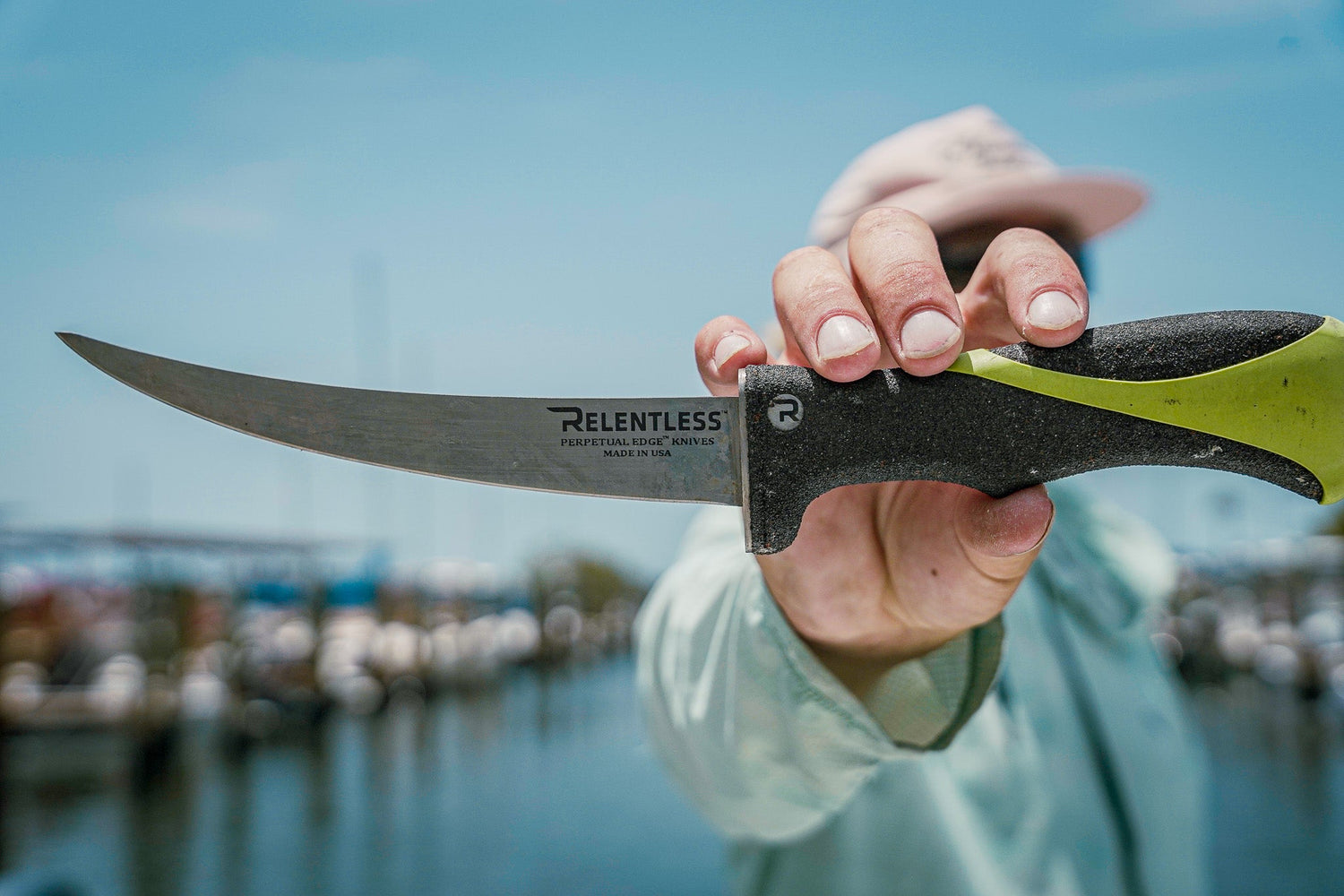
The best fish filleting knives make a long day on the water easier when it is time to clean your catch. A good fillet knife should move smoothly through skin and along bones, hold its edge through repeated cuts, and feel comfortable whether you are cleaning a few crappie at camp or breaking down a tuna at the dock.
The challenge is that the “best” knife depends on what you catch, where you fish, and how much maintenance you want after the day is done.
Freshwater anglers often need precision for delicate fish like trout and walleye. Saltwater anglers may need longer blades and stronger corrosion resistance for species like snapper, mahi-mahi, and halibut. Across both, one thing matters to everyone: a knife that keeps cutting cleanly without becoming another piece of gear that needs constant attention.
Anglers seeking a lightweight, corrosion-resistant upgrade often choose Relentless titanium fillet knives for cleaner cuts and reduced maintenance in wet, demanding conditions.

Quick fillet knife guide by fish type
|
Fish Type |
Recommended Blade |
Best For |
|
Trout, crappie, perch |
Precision and smaller fillets |
|
|
Walleye, bass, snapper |
Best all-around versatility |
|
|
Salmon, mahi-mahi |
Larger fish and longer cuts |
|
|
Tuna, halibut |
Long precision filleting |
What Makes the Best Fish Filleting Knife?
Choosing the right fillet knife starts with three basics: blade length, blade shape, and blade material. Get those right, and fish cleaning becomes faster, cleaner, and easier on your hands.
Blade length: choosing the right size for your catch
Different fish call for different blade lengths.
A smaller blade gives you more control when working around rib bones or trimming pin bones under low dock light. A longer blade helps you make smooth, uninterrupted passes through larger fillets.
For most anglers, these are the most useful sizes:
-
6-inch blade
Ideal for trout, crappie, perch, panfish, and smaller snapper. A shorter blade helps when working in tight areas or making careful detail cuts. A 6” curved fillet knife for smaller fish and precision cuts is often the best fit here.
-
7-inch blade
A true all-around option. Great for bass, walleye, redfish, and medium snapper. If you want one knife that can handle most fish, a 7” curved fillet knife for versatile all-around filleting is often the sweet spot.
-
9-inch blade
Better for salmon, striped bass, mahi-mahi, and larger game fish. The extra reach helps create smooth fillets with fewer stops. A 9” curved fillet knife for larger game fish can make those longer cuts easier.
-
10-inch blade
Best for halibut, tuna, and large salmon. A 10” straight fillet knife for long, clean cuts helps when making full passes through broad fillets.
Curved vs straight fillet knives
Most anglers prefer curved blades because they naturally follow the shape of the fish.
Curved blades help when:
-
skinning fillets
-
following rib cages
-
making sweeping cuts
-
working with most freshwater and medium-sized saltwater fish
Straight blades shine when:
-
making long precision cuts
-
trimming thick fillets
-
working on large fish like halibut or salmon
-
separating meat cleanly from larger bones
If you clean a wide range of fish, many anglers keep one of each.
Blade material matters: titanium vs traditional steel
Most fillet knives use stainless steel. It performs well, but many anglers know the routine. Rinse it. Dry it carefully. Sharpen it often. Hope it does not show any spots or rust after a wet weekend on the boat.
Titanium offers a different experience.
Relentless uses aerospace-grade titanium designed for wet, harsh, and demanding outdoor conditions. Titanium helps resist rust and corrosion, especially valuable for saltwater anglers, but equally useful for freshwater anglers storing gear in humid garages, truck bins, or tackle boxes. If you want to understand what sets these blades apart, it helps to read more about why Relentless knives outperform traditional steel fillet knives.
It is also lighter than traditional steel, which matters when you are cleaning a full limit of walleye or processing several mahi-mahi after a long offshore trip. Material performance matters enough that even the National Association of Corrosion Engineers emphasizes corrosion resistance as a major factor in long-term tool durability.
Best Fish Filleting Knives by Fishing Style
The best fish filleting knives often depend on how and where you fish.
Best fillet knives for freshwater anglers
Freshwater fish often require more finesse.
When filleting trout or crappie at camp, a shorter, flexible blade helps preserve delicate meat. A good curved knife also makes it easier to work around rib bones and remove pin bones cleanly when your hands are wet with fish slime.
Best choices:
-
6” Curved Fillet Knife for trout, perch, and panfish
-
7” Curved Fillet Knife for bass, walleye, and larger freshwater species

Best fillet knives for saltwater anglers
Saltwater fishing often demands more from your gear.
Snapper, redfish, and grouper can challenge edge retention. Offshore species like mahi-mahi and tuna require longer blades for cleaner passes. Salt spray, fish blood, and wet storage also increase the risk of corrosion, especially when cleaning fish on a rocking boat or packing up quickly after a long day offshore.
Best choices:
-
7” Curved Fillet Knife for snapper and redfish
-
9” Curved Fillet Knife for mahi-mahi and wahoo
-
10” Straight Fillet Knife for halibut and tuna
Proper cleaning matters too. The U.S. Food and Drug Administration’s seafood handling guidance recommends keeping tools clean and rinsed during fish preparation.

Best all-around fillet knife for anglers who fish both
If you fish freshwater one weekend and saltwater the next, the 7-inch curved blade is often the most versatile option.
It offers enough control for walleye and trout, but enough reach for snapper and redfish. For many anglers, it is the one knife that stays in the tackle bag year-round.
Recommended Relentless Fillet Knives
If you want a quick place to start, these are the most practical options.
Best for smaller freshwater fish
The 6” Curved Fillet Knife is ideal for precision work and delicate fillets.
Best overall for most anglers
The 7” Curved Fillet Knife is versatile enough for freshwater and saltwater fishing.
Best for large freshwater and offshore species
The 9” Curved Fillet Knife works well for larger fish and longer cuts.
Best for long precision cuts
The 10” Straight Fillet Knife is ideal for broad fillets and thick fish.
Why Premium Anglers Are Switching to Titanium Fillet Knives
Helps reduce rust concerns and maintenance demands
Titanium helps resist rust and corrosion, which can mean less worry when cleaning fish on the dock, rinsing gear at camp, or packing up quickly after a storm rolls in. That matters when your hands are wet, your gear is damp, and you want to get home without spending extra time on knife care.
Perpetual Edge Technology means less sharpening
Relentless knives use Perpetual Edge Technology, designed to help the blade sharpen as it cuts.
The Power Strip combines carbide and crushed diamond technology to help maintain cutting performance over time. That can mean fewer interruptions to touch up your edge when processing multiple fish. You can learn how Perpetual Edge Technology works and how it supports long-term cutting performance.
Lightweight design reduces hand fatigue
After cleaning ten walleye or several salmon, weight matters.
A lighter knife can help reduce hand and wrist fatigue during repetitive cuts. That is especially noticeable when trimming skin, following long rib lines, or making repeated passes through larger fillets.
Secure grip when hands are wet
Fish slime, blood, and water can make any knife harder to control.
Relentless uses a True Grit handle designed to improve grip in wet conditions, whether you are working at the dock or breaking down fish on a rocking boat.
How to Care for a Fillet Knife
Even premium knives need care.
A few simple habits help your knife perform well over time:
-
Rinse after every use
-
Dry before storing
-
Keep the sheath clean
-
Store in a dry location
-
Inspect the edge regularly
Titanium helps reduce maintenance demands, but no knife should be stored wet or neglected.
For more guidance, the Relentless knife care FAQs cover common maintenance questions, and the Lifetime Maintenance Warranty explains available long-term support.
Frequently Asked Questions About Fish Filleting Knives
What size fillet knife is best?
A 7-inch fillet knife is the best all-around choice for most anglers. Smaller fish often benefit from a 6-inch blade, while larger species may need 9 or 10 inches.
Is a curved or straight fillet knife better?
Curved blades work best for most fish and offer more flexibility. Straight blades are often preferred for larger fish and long, precision cuts.
Are titanium fillet knives worth it?
For anglers who want lighter weight, corrosion resistance, and less maintenance, titanium can be a strong long-term choice.
What is the best fillet knife for freshwater fish?
A 6-inch or 7-inch curved fillet knife works well for trout, crappie, walleye, and bass.
What is the best fillet knife for saltwater fish?
A 7-inch to 10-inch blade is often best, depending on species. Corrosion resistance becomes especially important.
How often should you sharpen a fillet knife?
That depends on use and blade type. Knives designed to help maintain their edge may need less frequent sharpening, but every knife should be checked regularly.
Find the Right Fillet Knife for Your Next Catch
The best fish filleting knives match the way you fish.
Choose your blade length based on the species you clean most often. Decide whether you prefer a curved or straight blade. Think about how much time you want to spend maintaining your knife after each trip.
For anglers who want a premium knife built for freshwater and saltwater use, titanium offers clear advantages. Less rust concern, lighter handling, and cutting performance designed to keep up with repeated use.


Leave a comment
This site is protected by hCaptcha and the hCaptcha Privacy Policy and Terms of Service apply.